Montessori 101
What is Montessori
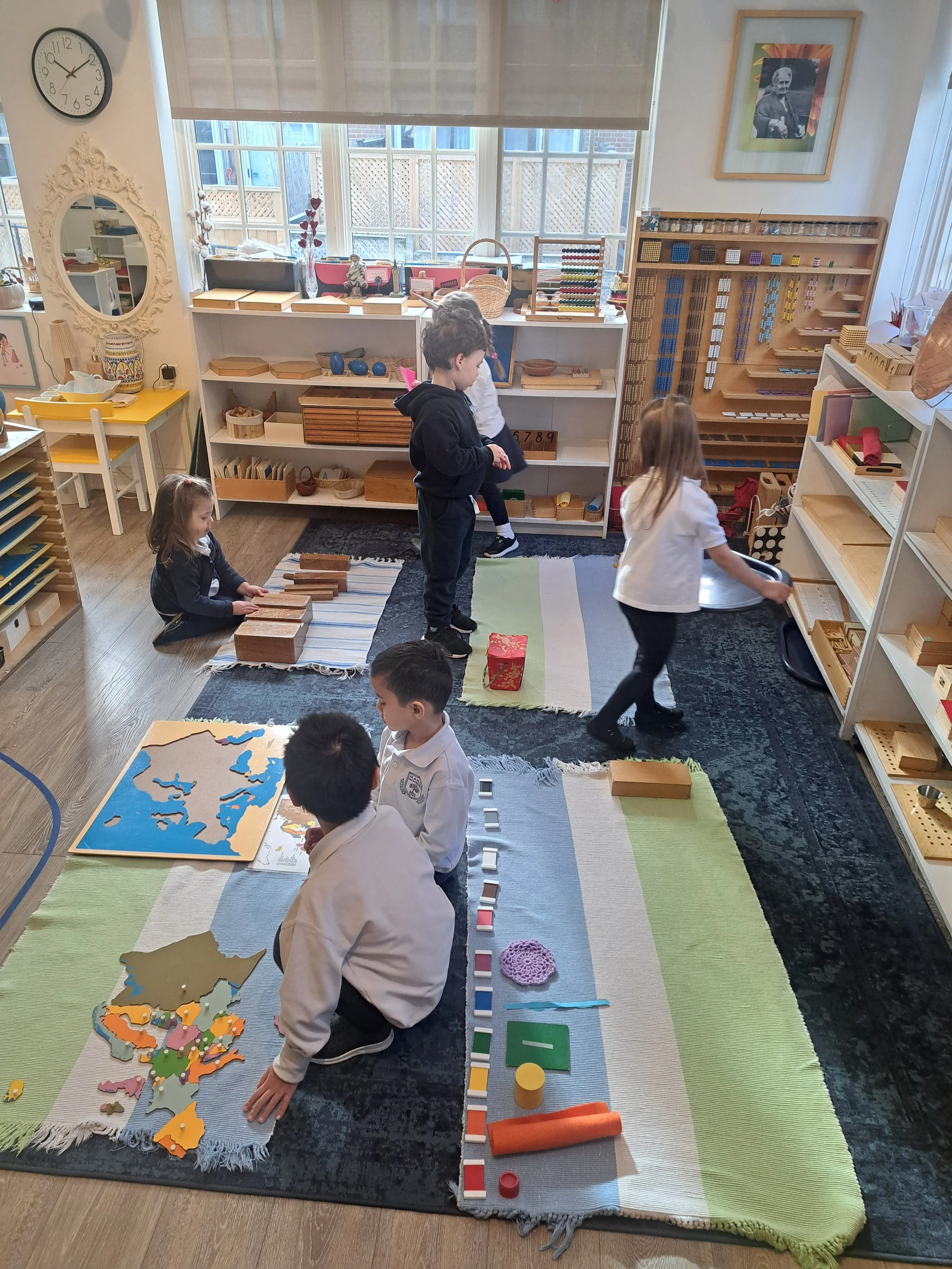
Montessori education, developed by Dr. Maria Montessori, nurtures each child’s potential through hands-on learning, independence, and self-paced exploration. In mixed-age classrooms, students build confidence, practical skills, and a lasting love of learning.
The Association Montessori Internationale (AMI)
Founded by Maria Montessori in 1929, the Association Montessori Internationale (AMI) upholds authentic Montessori practice and global standards. Manor Montessori follows AMI principles, uses AMI-approved materials and all our Casa Teachers are AMI Certified - this ensures a true Montessori experience.

The Montessori Curriculum
Montessori education covers five interconnected areas, each supporting the whole child—socially, academically, emotionally, and physically.
-
Practical Life activities build independence, focus, and fine motor skills. Children learn everyday tasks—such as washing hands, dressing, pouring, and food prep—through step-by-step activities that strengthen coordination and confidence.
-
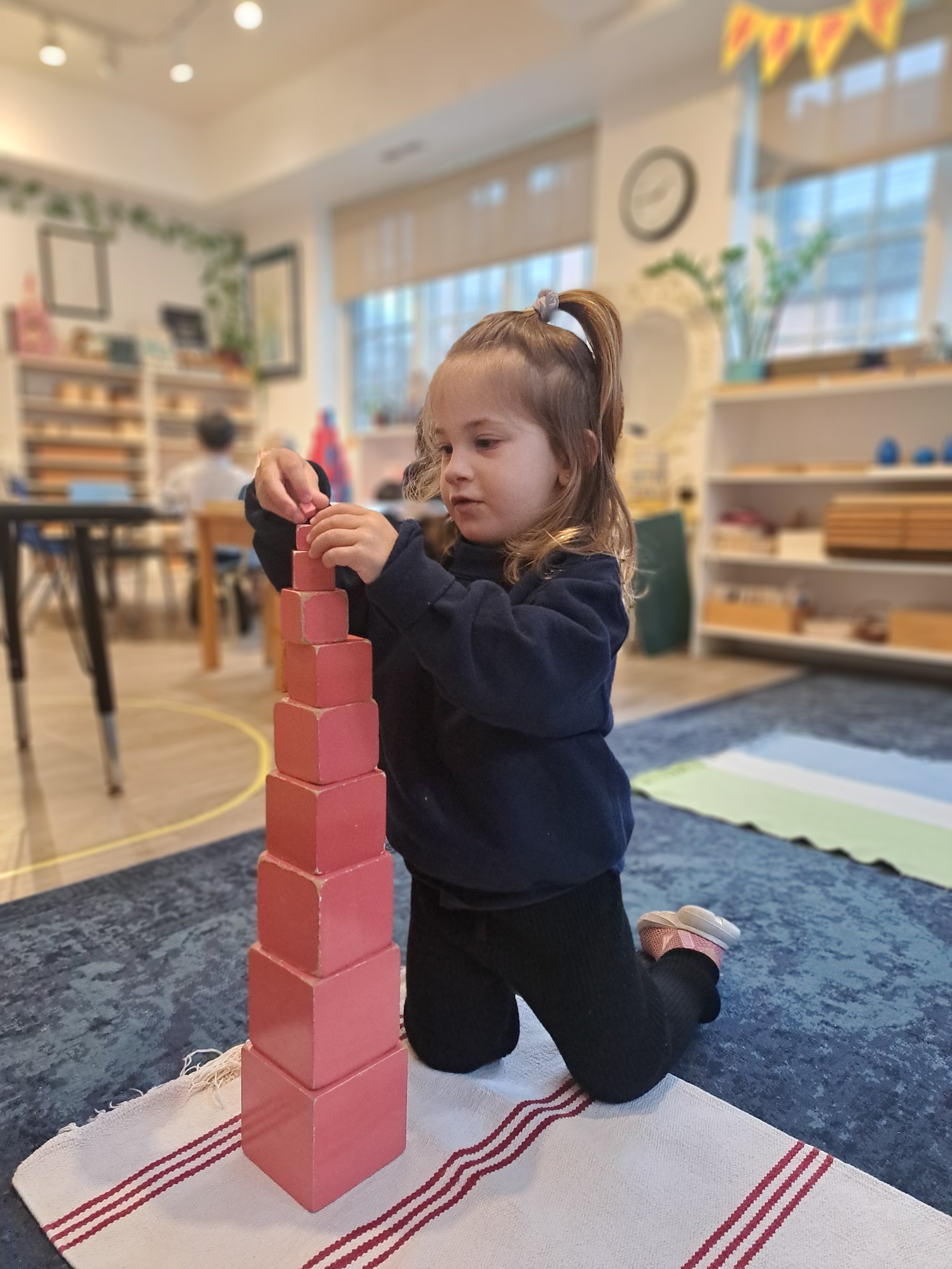
Sensorial materials refine the senses and help children explore qualities like color, size, texture, sound, and shape. Each material encourages reasoning, comparison, and self-correction.
-
Math concepts progress from concrete to abstract. Using tactile materials like bead chains, number rods, and fraction circles, children explore numbers, operations, decimals, and fractions in a way that feels meaningful and intuitive.
-
Language learning begins with rich oral language and tactile materials such as Sandpaper Letters and the Moveable Alphabet. Children then develop phonetic reading, writing, grammar, vocabulary, and storytelling skills, gaining confidence through presentations and classroom discussions.
-
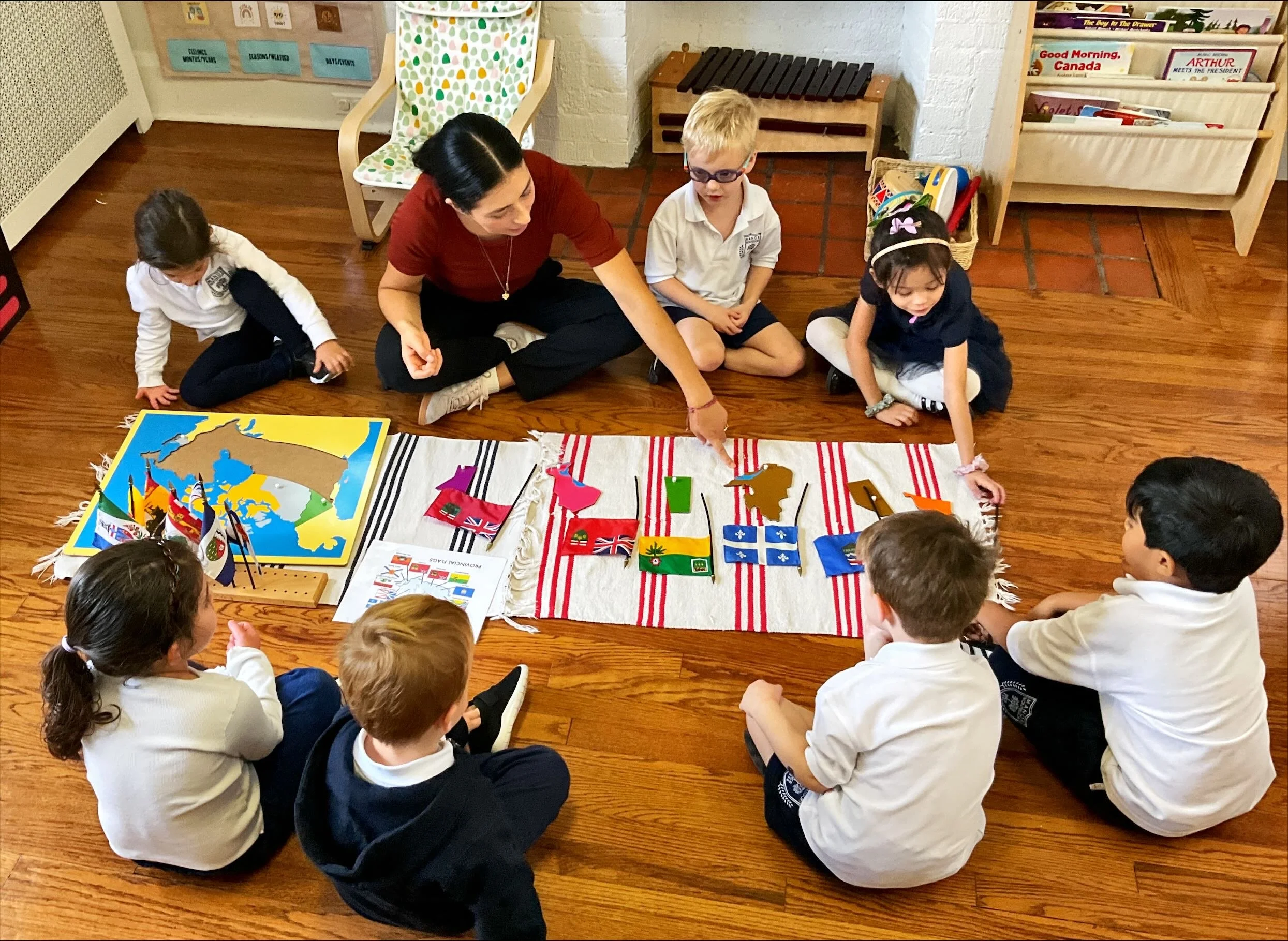
Cultural Studies includes geography, history, science, botany, zoology, and global traditions. Students explore maps, artifacts, life cycles, and experiments. In Elementary, learning expands through research projects, presentations, and field trips.
The Montessori Difference
Mixed-age classrooms support mentorship and peer learning
Self-paced, child-led learning tailored to each student
Low student–teacher ratios with teachers as guides
Freedom within clear limits, fostering focus, creativity, and intrinsic motivation